Experiments in interaction, materials and a simple GUI app.
01 / 02Breathing Paper
03 / Explorations
Overview
Breathing Paper
A Tactile Breathing Companion for Waiting Spaces

Breathing Paper is an interactive breathing companion designed for waiting and high-stress public spaces.
It uses a shape-changing paper structure to translate breathing rhythm into a tactile, visible motion. Through a touch-based interaction, the device shifts from a subtle idle state to a more guided breathing pace, helping users slow down and regain a sense of control.
The project explores how physical computing, paper mechanics, and scenario-based storytelling can turn anxious moments of waiting into small, embodied moments of regulation.
Context
Waiting, Stress, and the Loss of Rhythm
In moments of waiting, tension, or rushed movement, people can lose a sense of control over their own bodily rhythm. Breath becomes shallow, attention scatters, and time feels harder to hold. Breathing Paper begins from this state of instability, exploring how a small tactile object can make breathing visible and easier to follow.
Concept
Concept
A Tactile Rhythm for Regaining Control
Breathing Paper uses a shape-changing paper structure to make breathing visible. Through touch, the device shifts from a subtle idle state to a clearer guided rhythm, helping users slow down and reconnect with their body in stressful waiting moments.
Paper Motion Exploration
Paper Motion Exploration
Turning Paper into a Breathing Structure
The paper structure began with a waterbomb tessellation crease pattern. By folding the flat pattern into a cylindrical form, the material gains a controlled ability to compress and extend. This structural behaviour became the basis for the breathing motion: a repeated shift between a taller, narrower state and a shorter, wider state.
Waterbomb crease pattern
Flat folds define the structure’s compressible geometry.

Kaleidocycle motion reference
Repeated fold transitions suggest a cyclic movement language.
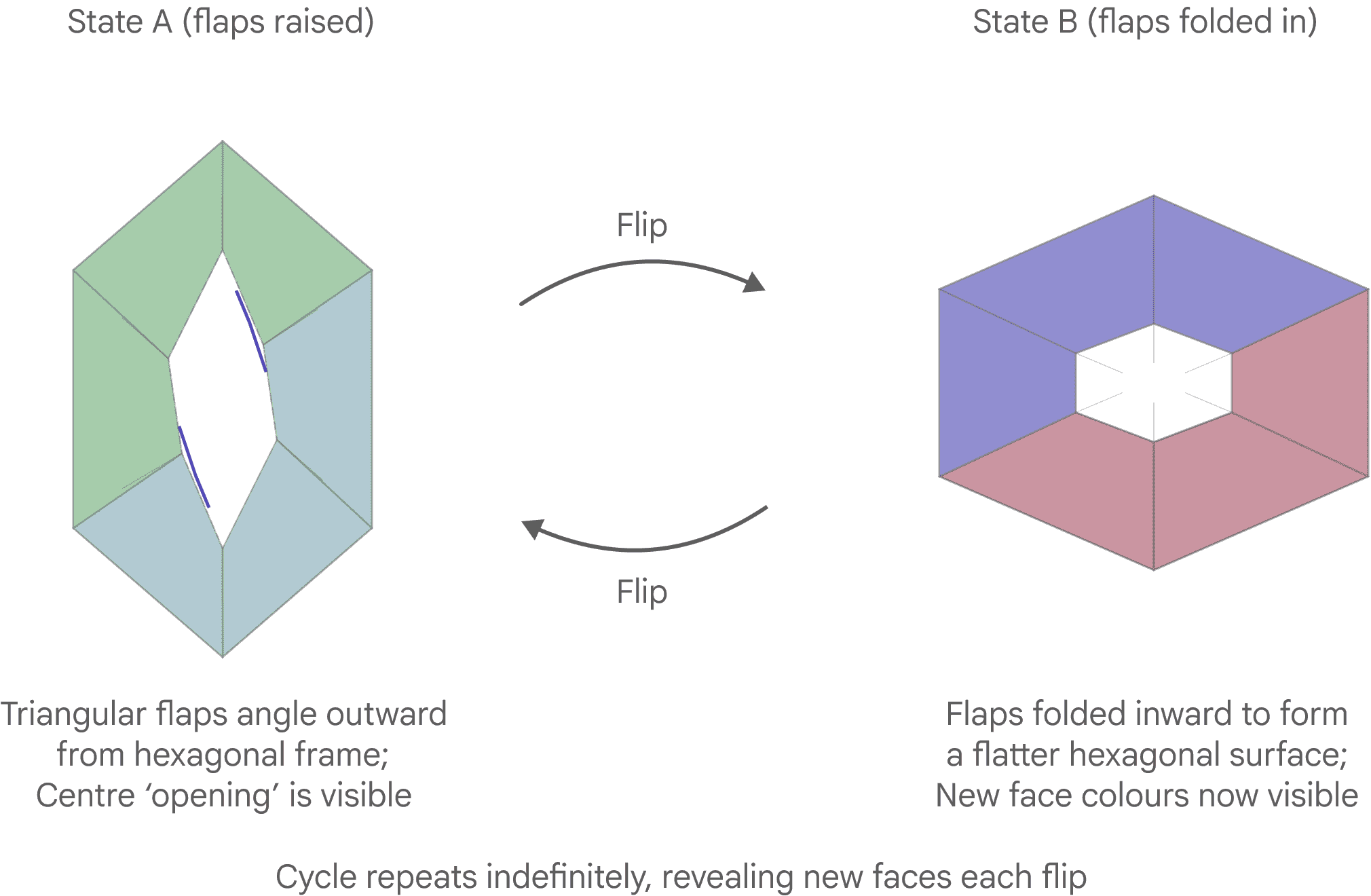
Paper ball motion test
The folded form translates compression into visible breathing-like change.

Technical Setup
Technical Setup
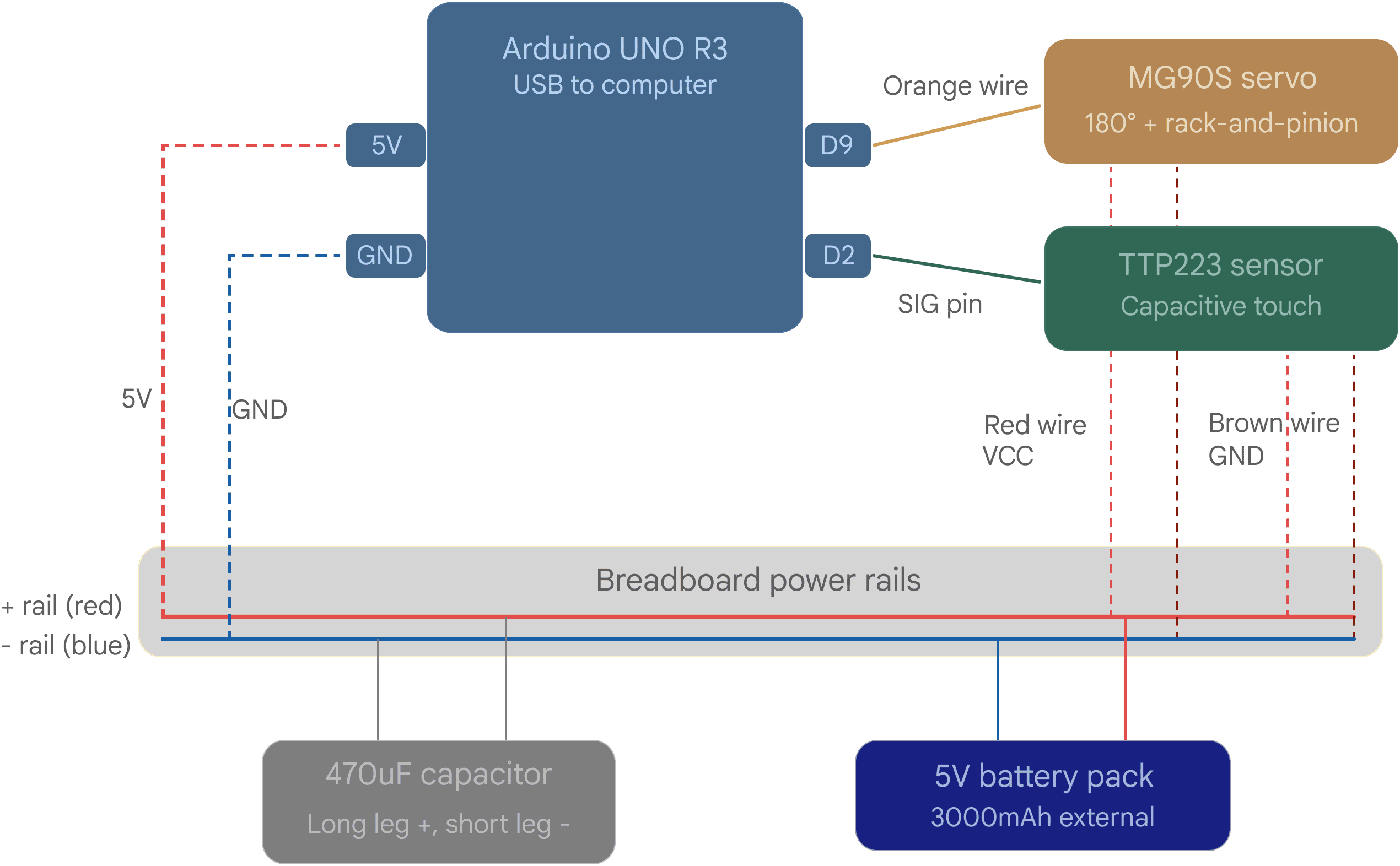
The prototype uses a TTP223 capacitive touch sensor as input, an Arduino UNO as the controller, and an MG90S servo as the actuator. The servo drives the rack-and-pinion mechanism, which transfers rotational motion into vertical rack movement. This movement then pushes and pulls the folded paper structure to create contraction and expansion.
A separate 5V battery pack powers the servo for more stable motor operation, while Arduino handles touch detection, timing control, and the transition between idle and active breathing rhythms.
System Logic
System Logic
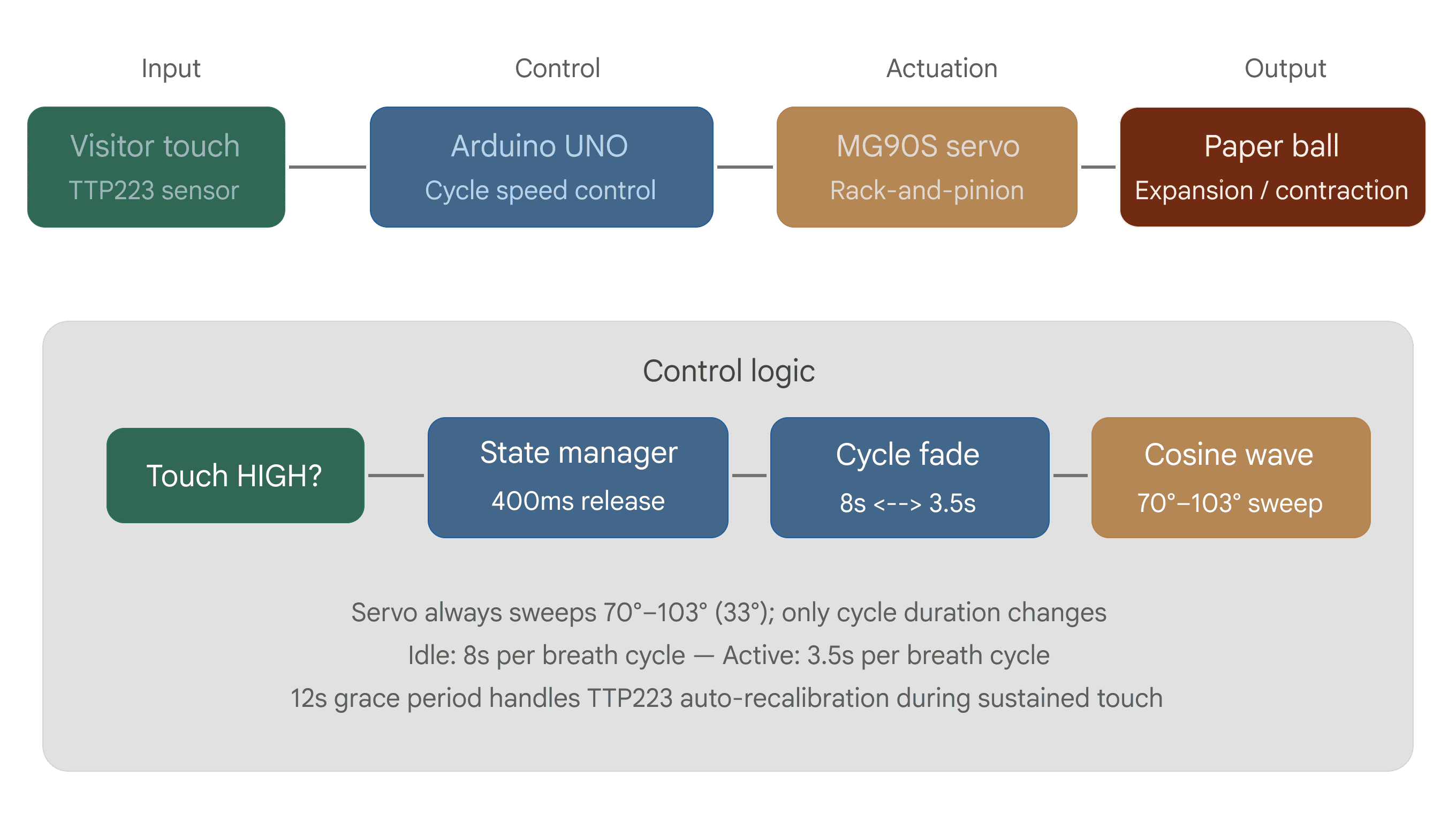
The interaction is designed as a speed change, not a change in movement range: the servo keeps the same sweep range, while the cycle shifts from a slow idle rhythm to a clearer active rhythm.
Interaction States
Interaction States

Prototype Overview
Prototype Overview
From Paper Form to Interactive Object


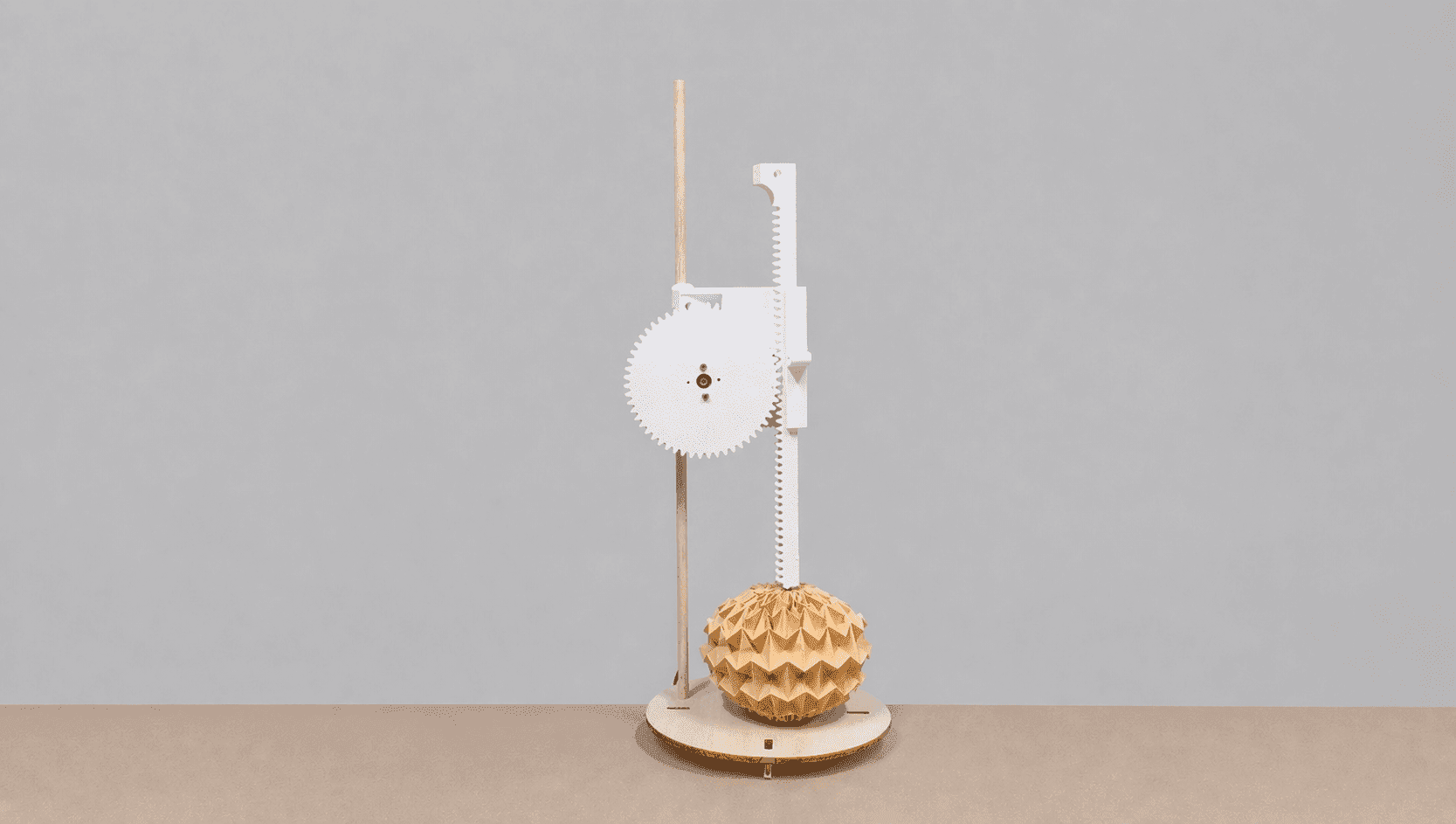
The prototype brings together a folded paper ball, a rack-and-pinion movement, a capacitive touch pad, and a wooden base. The paper structure is anchored at the bottom and driven from the top, allowing it to shift between contraction and expansion. This physical movement turns the folded form into a visible breathing rhythm that users can follow through touch.
Reflection
Reflection
This project revealed the difficulty of turning a folded paper structure into a controlled breathing interface. The paper ball could express contraction and expansion visually, but its movement depended heavily on precise alignment between the fixed base, the vertical rack, and the upper contact point. The idle and active states also required careful pacing: the motion had to be visible enough to guide breathing, while remaining subtle enough to feel calm. Future iterations could focus on improving the rack stability, refining the device finish, hiding technical components more cleanly, and testing whether users can intuitively follow the paper rhythm in waiting scenarios.