Projects
Projects
Writing Samples
Writing Samples
Info
Info


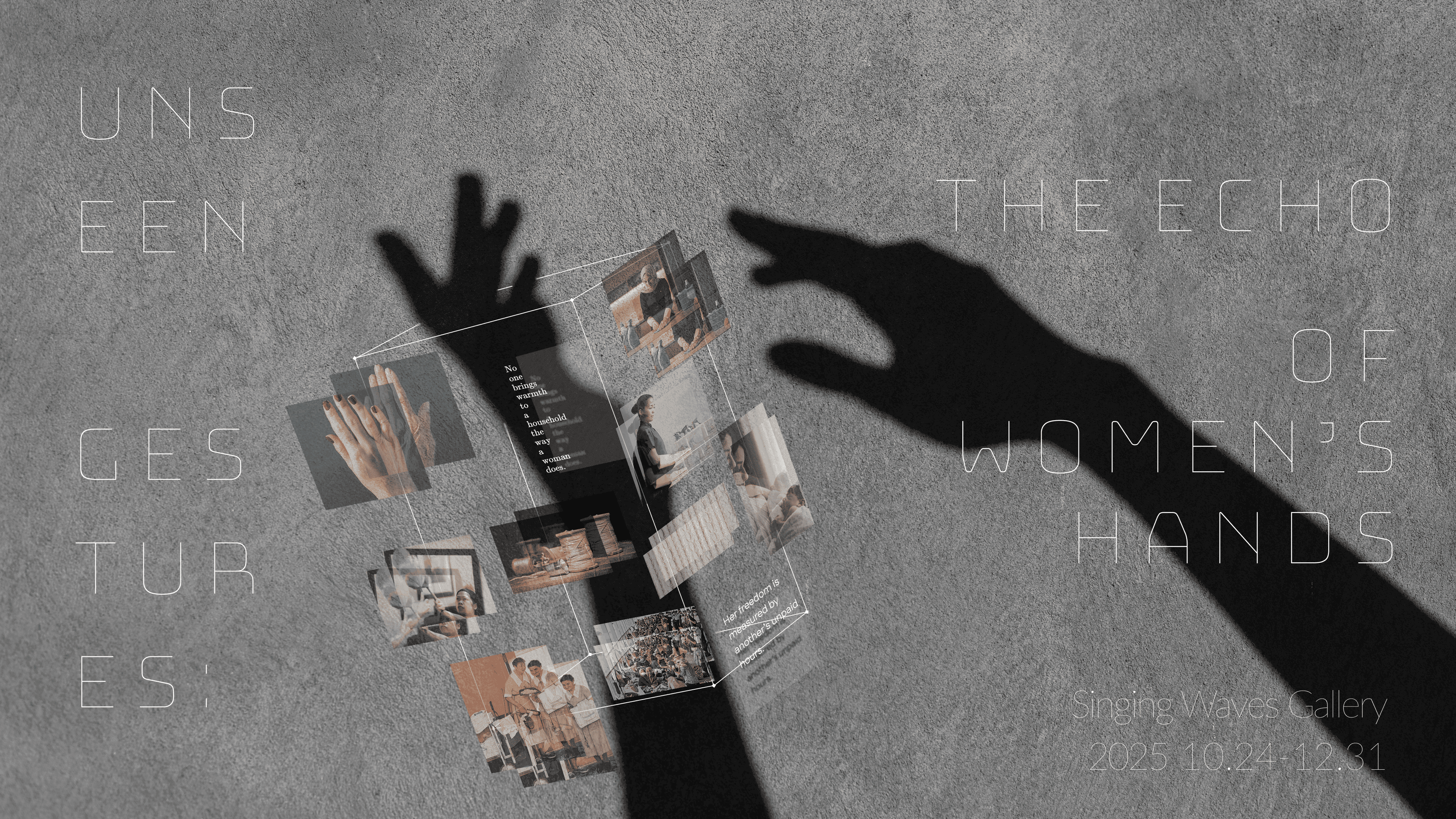
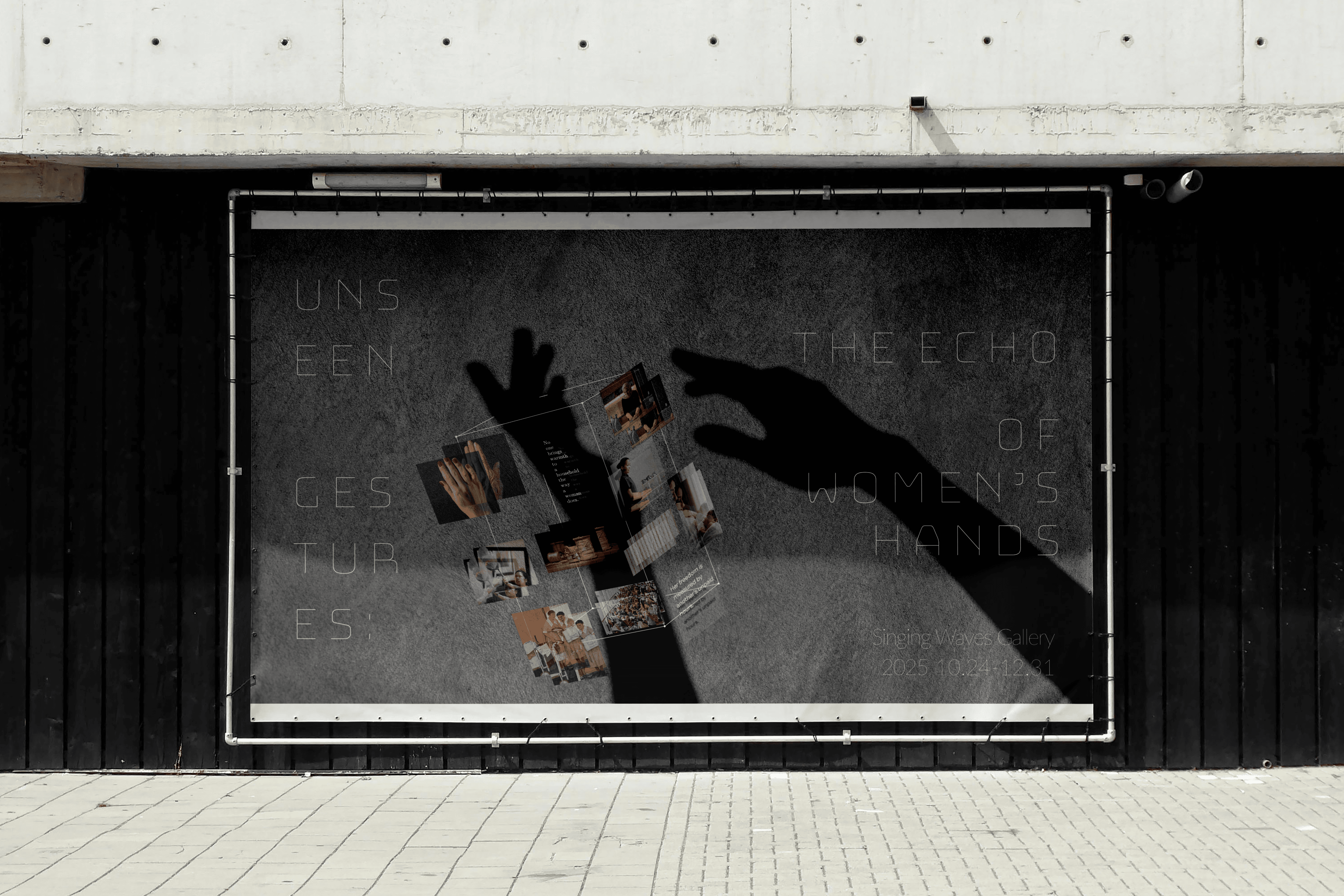
Unseen Gestures:
The Echo of Women's Hands
Date: Oct–Nov 2025
Duration: 9 weeks
Status/Venue: Unrealised proposal · CityU HK CMC 3F Singing Waves Gallery
Team/Role: Group (8 members) · Lead curator · Visual/Spatial design lead
Key Contributions:
· Curatorial Framework + Research
· Artwork Selection & Curatorial Edit
· Spatial Layout & Installation Plan
· Key Visual Development + Print Materials
· Presentation Narrative + Show Flow
· Final Deck Review (Style + Consistency)
Date: Oct–Nov 2025
Duration: 9 weeks
Status/Venue: Unrealised proposal · CityU HK CMC 3F Singing Waves Gallery
Team/Role: Group (8 members) · Lead curator · Visual/Spatial design lead
Key Contributions:
· Curatorial Framework + Research
· Artwork Selection & Curatorial Edit
· Spatial Layout & Installation Plan
· Key Visual Development + Print Materials
· Presentation Narrative + Show Flow
· Final Deck Review (Style + Consistency)
Date: Oct–Nov 2025
Duration: 9 weeks
Status/Venue: Unrealised proposal · CityU HK CMC 3F Singing Waves Gallery
Team/Role: Group (8 members) · Lead curator · Visual/Spatial design lead
Key Contributions:
· Curatorial Framework + Research
· Artwork Selection & Curatorial Edit
· Spatial Layout & Installation Plan
· Key Visual Development + Print Materials
· Presentation Narrative + Show Flow
· Final Deck Review (Style + Consistency)
Exhibition Structure

Unseen Gestures is an unrealised exhibition proposal that reads women’s hands as both celebrated emblems of agency and quiet surfaces where power settles, disciplines, and extracts.
Bringing together works across image, object, and moving image, it traces how ‘natural’ gestures of care and competence are produced by neoliberal self-management, patriarchal virtue, and post-colonial labour hierarchies.
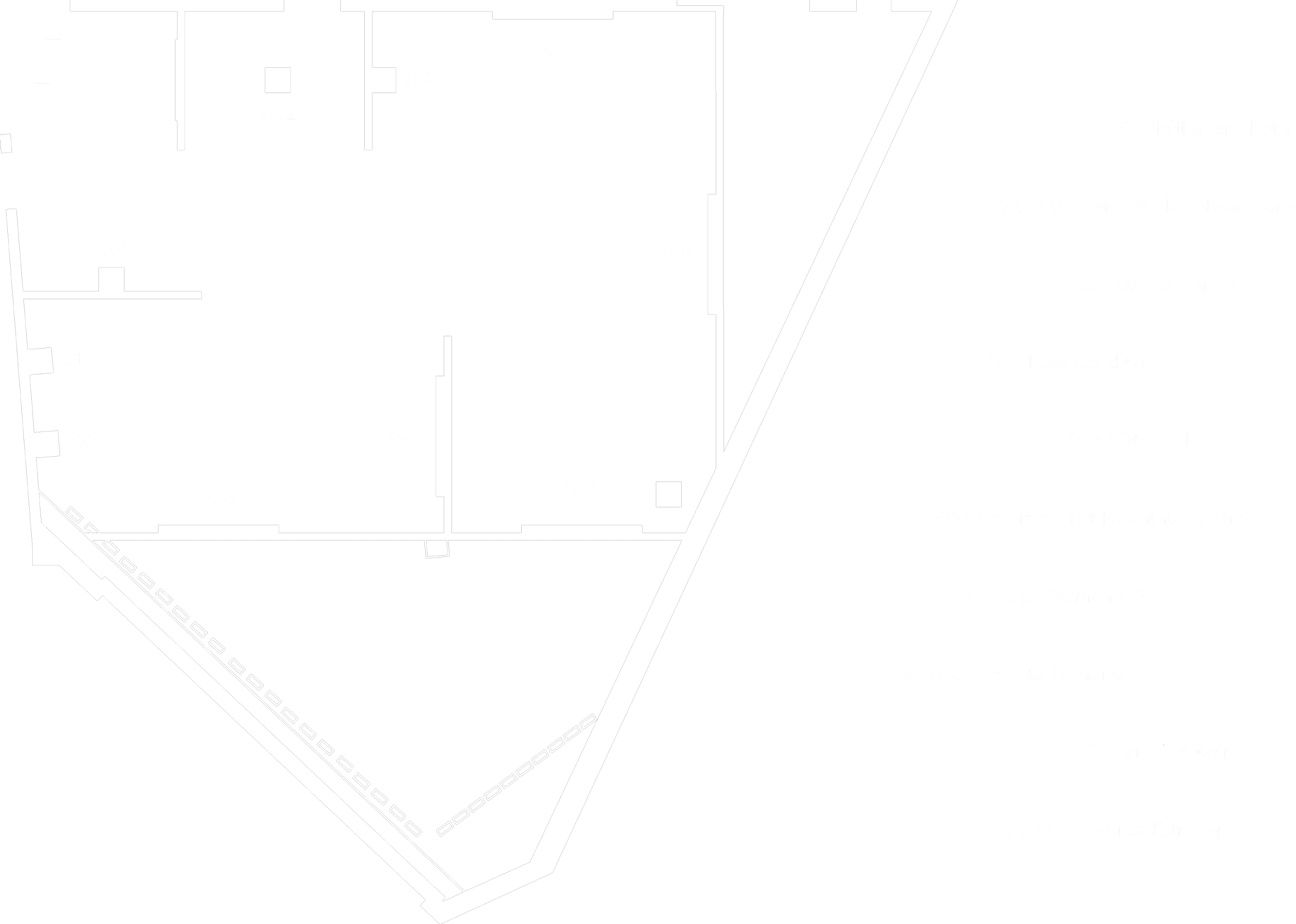
Designed for a white-box gallery, the route loops as an arc. Deliverables include a three-part structure, spatial plan, brochure, and a works catalogue with notes.
Full Curatorial Statement
Unseen Gestures confronts a tension that has long been normalised: the hand is celebrated as a symbol of agency, yet for many women it remains a site where power quietly settles, disciplines, and extracts. Society praises the hand that ‘creates a future’ or ‘builds a life,’ but such praise often masks whose hands are expected to clean, to serve, to soothe, to repair, and under what conditions.
This exhibition foregrounds gestures that have been framed as natural, moral, or self-evident: caring for others, maintaining domestic order, sustaining emotional life, performing forms of labour that rarely receive recognition. These gestures are not neutral. They are produced within systems that redistribute responsibility downwards and outwards, turning structural inequities into personal duties. Women’s hands become the surface on which these expectations are written.
Across the works here, the hand emerges not only as a tool, but as evidence — evidence of how bodies are patterned by neoliberal demands for self-management, by patriarchal narratives of virtue and sacrifice, and by post-colonial hierarchies that determine whose labour is visible and whose suffering is tolerable.
Unseen Gestures refuses the soft rhetoric of resilience and empowerment. Instead, it calls attention to the political conditions that shape even the smallest movements. These works insist that gestures are never merely gestures: they are traces of power, and they ask us to recognise the structures that continue to shape, contain, and lay claim to women’s hands.
Full Curatorial Statement
Unseen Gestures confronts a tension that has long been normalised: the hand is celebrated as a symbol of agency, yet for many women it remains a site where power quietly settles, disciplines, and extracts. Society praises the hand that ‘creates a future’ or ‘builds a life,’ but such praise often masks whose hands are expected to clean, to serve, to soothe, to repair, and under what conditions.
This exhibition foregrounds gestures that have been framed as natural, moral, or self-evident: caring for others, maintaining domestic order, sustaining emotional life, performing forms of labour that rarely receive recognition. These gestures are not neutral. They are produced within systems that redistribute responsibility downwards and outwards, turning structural inequities into personal duties. Women’s hands become the surface on which these expectations are written.
Across the works here, the hand emerges not only as a tool, but as evidence — evidence of how bodies are patterned by neoliberal demands for self-management, by patriarchal narratives of virtue and sacrifice, and by post-colonial hierarchies that determine whose labour is visible and whose suffering is tolerable.
Unseen Gestures refuses the soft rhetoric of resilience and empowerment. Instead, it calls attention to the political conditions that shape even the smallest movements. These works insist that gestures are never merely gestures: they are traces of power, and they ask us to recognise the structures that continue to shape, contain, and lay claim to women’s hands.
Full Curatorial Statement
Unseen Gestures confronts a tension that has long been normalised: the hand is celebrated as a symbol of agency, yet for many women it remains a site where power quietly settles, disciplines, and extracts. Society praises the hand that ‘creates a future’ or ‘builds a life,’ but such praise often masks whose hands are expected to clean, to serve, to soothe, to repair, and under what conditions.
This exhibition foregrounds gestures that have been framed as natural, moral, or self-evident: caring for others, maintaining domestic order, sustaining emotional life, performing forms of labour that rarely receive recognition. These gestures are not neutral. They are produced within systems that redistribute responsibility downwards and outwards, turning structural inequities into personal duties. Women’s hands become the surface on which these expectations are written.
Across the works here, the hand emerges not only as a tool, but as evidence — evidence of how bodies are patterned by neoliberal demands for self-management, by patriarchal narratives of virtue and sacrifice, and by post-colonial hierarchies that determine whose labour is visible and whose suffering is tolerable.
Unseen Gestures refuses the soft rhetoric of resilience and empowerment. Instead, it calls attention to the political conditions that shape even the smallest movements. These works insist that gestures are never merely gestures: they are traces of power, and they ask us to recognise the structures that continue to shape, contain, and lay claim to women’s hands.
Exhibition
Structure
Section 1
The Disciplined Body as Seen Through the Hand
The hand, often treated as merely functional, bears the earliest traces of social discipline. Its gestures are trained into acceptability; its surfaces learn to conceal strain, as femininity and propriety are rehearsed through habit, repetition, and touch. Viewers are invited to notice how ‘natural’ movements are staged, corrected, and internalised, and how power enters the body without spectacle.
Section 1
The Disciplined Body as Seen Through the Hand
The hand, often treated as merely functional, bears the earliest traces of social discipline. Its gestures are trained into acceptability; its surfaces learn to conceal strain, as femininity and propriety are rehearsed through habit, repetition, and touch. Viewers are invited to notice how ‘natural’ movements are staged, corrected, and internalised, and how power enters the body without spectacle.
Section 2
The Neoliberal Promise Embedded in Women’s Hands
Across contemporary culture, the hand is celebrated as a site of initiative and self-making, and it becomes a symbol of perseverance, creativity, and possibility. Yet this language of promise is rarely benign, because it folds women’s labour into aspiration while obscuring the conditions that produce exhaustion. Here, viewers are asked to track how empowerment rhetoric turns effort into moral duty and inequality into an individual burden.
Section 2
The Neoliberal Promise Embedded in Women’s Hands
Across contemporary culture, the hand is celebrated as a site of initiative and self-making, and it becomes a symbol of perseverance, creativity, and possibility. Yet this language of promise is rarely benign, because it folds women’s labour into aspiration while obscuring the conditions that produce exhaustion. Here, viewers are asked to track how empowerment rhetoric turns effort into moral duty and inequality into an individual burden.
Section 2
The Neoliberal Promise Embedded in Women’s Hands
Across contemporary culture, the hand is celebrated as a site of initiative and self-making, and it becomes a symbol of perseverance, creativity, and possibility. Yet this language of promise is rarely benign, because it folds women’s labour into aspiration while obscuring the conditions that produce exhaustion. Here, viewers are asked to track how empowerment rhetoric turns effort into moral duty and inequality into an individual burden.
Section 3
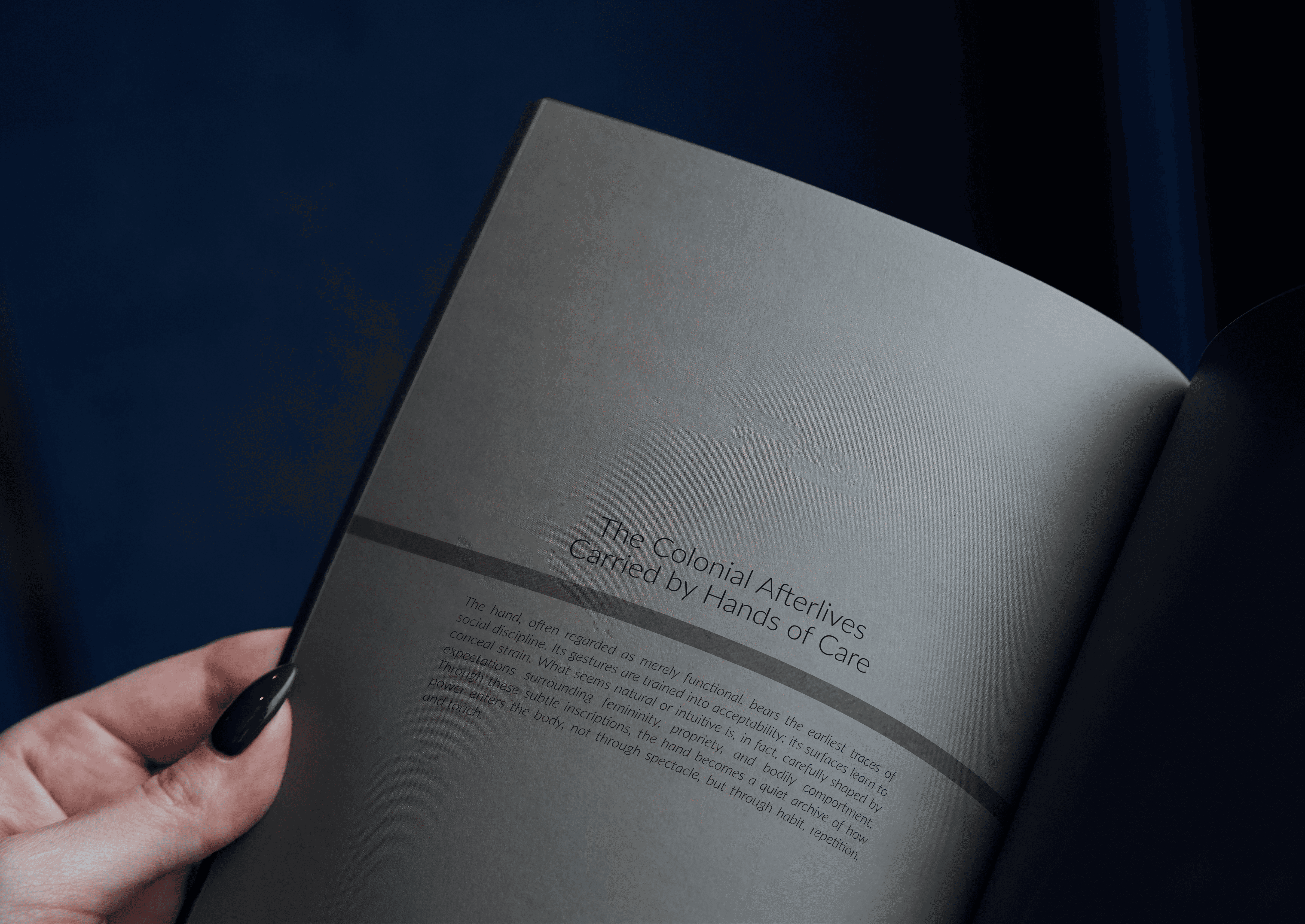
The Colonial Afterlives Carried by Hands of Care
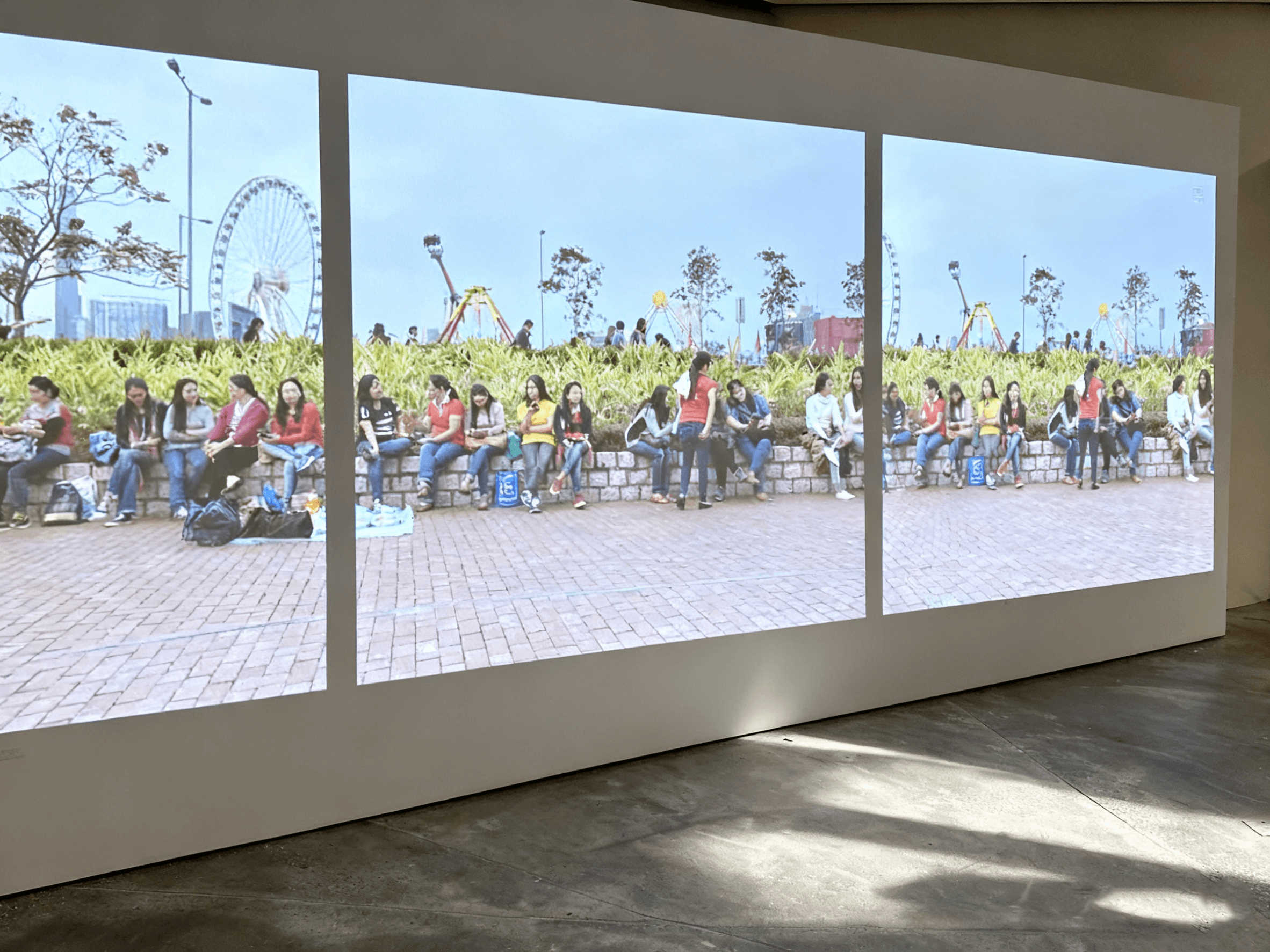
Care is organised through uneven histories of empire and migration, and these histories shape whose hands serve and whose bodies are allowed to rest. In this section, the hand registers the afterlife of colonial order as a living infrastructure of dependency, disposability, and intimate service. Viewers are asked to attend to how ‘care’ is racialised and outsourced, and how devotion can mask extraction and fatigue becomes normalised.
Section 3
The Colonial Afterlives Carried by Hands of Care
Care is organised through uneven histories of empire and migration, and these histories shape whose hands serve and whose bodies are allowed to rest. In this section, the hand registers the afterlife of colonial order as a living infrastructure of dependency, disposability, and intimate service. Viewers are asked to attend to how ‘care’ is racialised and outsourced, and how devotion can mask extraction and fatigue becomes normalised.
Spatial Plan
Spatial Plan


Artwork Selection
Artwork Selection


Section 1
The Disciplined Body as Seen Through the Hand
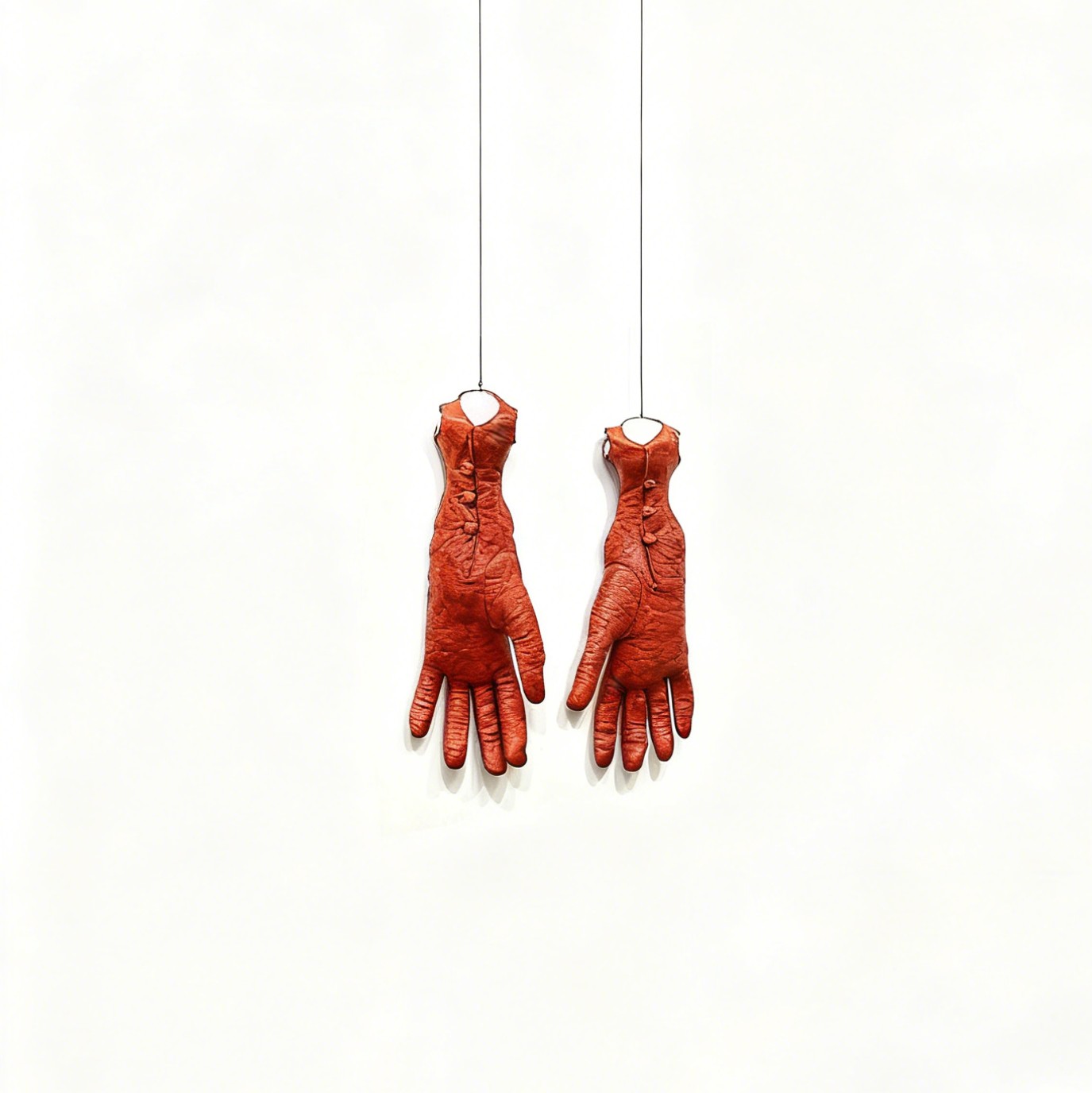
Claire Watson
American, 1957–
Neither and Both
2005
Cloves, glove leather, wire, sawdust, aniline dye; wall mounted
Each approx. 28 x 13 x 8 cm
Claire Watson’s Neither and Both cuts, stitches, and stuffs used ladies’ leather gloves into a corset-like form, turning a ‘protective’ accessory into a rigid structure of restraint.
In Section 1, the work frames the hand as a site of discipline shaped by everyday norms, and it invites viewers to notice how softness is engineered into constraint long before the hand can appear ‘capable’, creative, or caring.


Section 1
The Disciplined Body as Seen Through the Hand
Claire Watson
American, 1957–
Neither and Both
2005
Cloves, glove leather, wire, sawdust, aniline dye; wall mounted
Each approx. 28 x 13 x 8 cm
Claire Watson’s Neither and Both cuts, stitches, and stuffs used ladies’ leather gloves into a corset-like form, turning a ‘protective’ accessory into a rigid structure of restraint.
In Section 1, the work frames the hand as a site of discipline shaped by everyday norms, and it invites viewers to notice how softness is engineered into constraint long before the hand can appear ‘capable’, creative, or caring.


Up Next-
The Lingo Trap of Patriarchy:
From Surveillance to Subjectivity